
STANDARD
EN 17 242:2025 Standard
The new European standard for laboratory safety.
New standard for ventilated enclosures with recirculating filtered air
The EN 17 242:2025 standard, officially published and coming into force at the end of 2025, now constitutes the single European reference for Ventilated Enclosures with Recirculating Filtered Air. This text harmonizes safety requirements across the European Union, replacing the disparities of former national frameworks (such as NF X 15-211). By establishing mandatory type-testing protocols and on-site inspections, the EN 17 242:2025 standard provides guarantees that align with the containment standards of ducted fume hoods.
Why this new standard?
The EN 17 242:2025 standard has a dual objective:
- European harmonization : ensuring the applicability and recognition of the safety of filtration fume hoods across Europe.
- Safety equivalence : officially positioning filtration fume hoods as leading safety solutions capable of providing protection evolving in parallel with externally ducted systems.
- Performance requirement : imposing mandatory type tests and on-site inspections to validate the real effectiveness of containment and filtration.
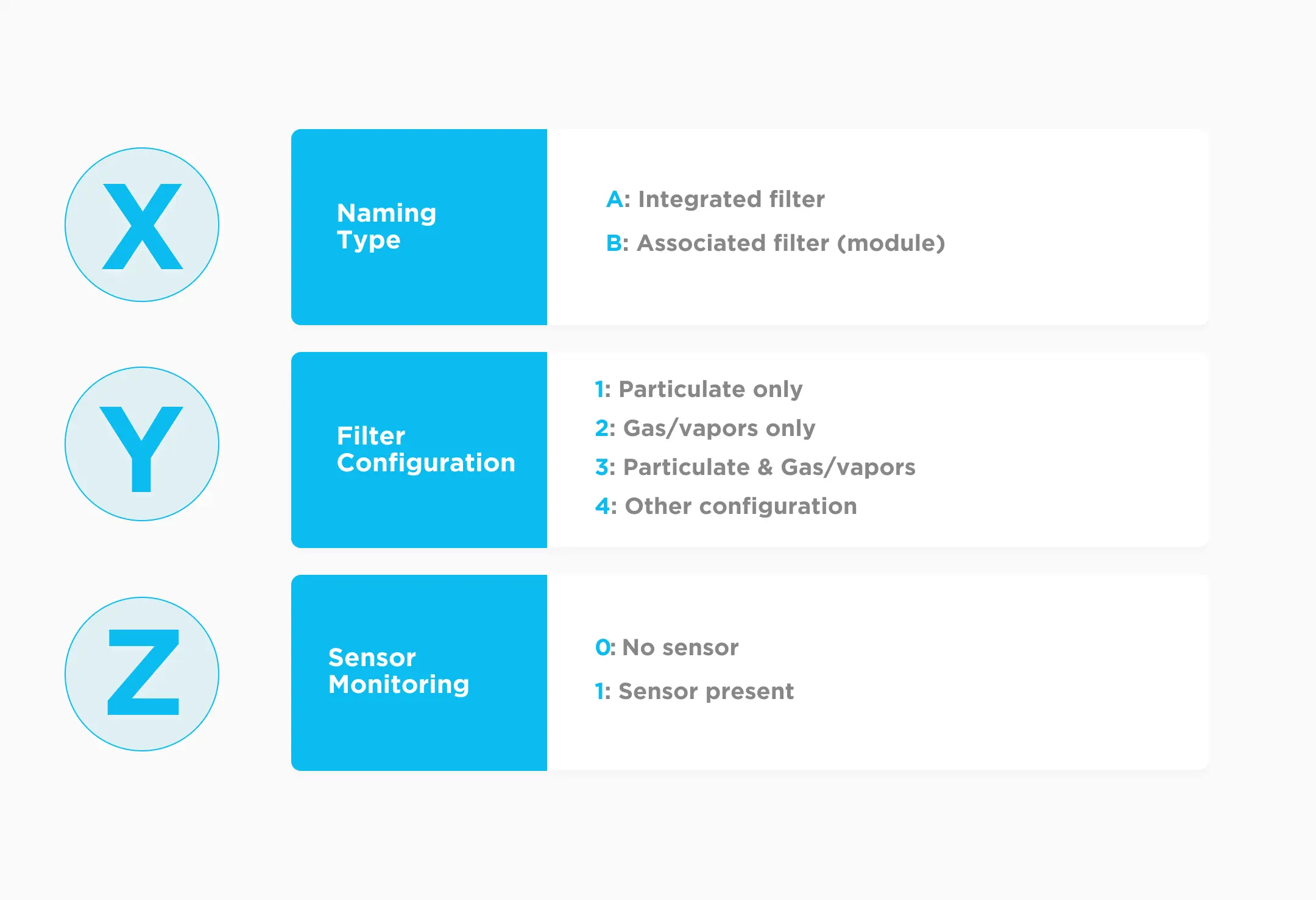
What changes: A new X / Y / Z classification
The EN 17 242:2025 standard marks the obsolescence of the former “Class 1” and “Class 2” categories derived from the French NF X 15-211 standard. It establishes a rigorous nomenclature, structured into three distinct segments, to accurately characterize the technical capabilities and the level of safety of each device.
For example, an Erlab unit equipped with a combination of molecular and particulate filters, as well as a Molecode sensor, is now classified A / 3 / 1.
Erlab expertise: rigorous performance testing in our R&D laboratory
In order to guarantee full compliance with the strict requirements of the EN 17 242:2025 standard, all our filtration solutions are subject to a rigorous testing protocol within our Research and Development laboratory. These performance tests are carried out under strictly controlled conditions, where the temperature is maintained between 20°C and 25°C and the relative humidity between 30% and 70%. This constant environmental control is essential to ensure the reproducibility of measurements and validate with absolute precision the containment and retention capabilities of our equipment against the most critical pollutants.
TEST 1
Molecular filtration efficiency test
This test validates the filter’s retention capacity against three types of pollutants: Isopropanol (VOC), Cyclohexane, and Hydrochloric Acid.
The concentration measured at the filter outlet must be lower than 1% of the lowest Occupational Exposure Limit (OEL) recorded in Europe (based on the GESTIS database).
As the EN 17 242:2025 standard imposes more restrictive safety criteria, the use of a second safety filter is recommended to guarantee an outlet concentration not exceeding 1% of the OEL.
TEST 2
Particle leakage test
Essential for all configurations incorporating HEPA or ULPA filters.
The overall leakage rate of the filtration system must be less than or equal to 0.01%, guaranteeing absolute leak-tightness against powders and aerosols.
TEST 3
IPA and SF6 containment test
This test verifies that the enclosure perfectly contains pollutants within, preventing any leakage toward the operator’s breathing zone.
It utilizes Isopropanol (IPA) as a tracer gas with high-precision sampling grids located at the front opening and the filter outlet.
TEST 4
Containment robustness test: IPA and SF6
This test simulates real-world laboratory airflow disturbances (drafts, movement).
A moving plate travels at a speed of 1 m/s across the front opening. The system must demonstrate its ability to maintain containment despite these external turbulences.

On-site maintenance and safety: a guarantee of daily compliance
Compliance with the EN 17 242:2025 standard does not stop at manufacturing. It imposes rigorous protocols at your place of use. When installing a device, installation and routine tests (IQ/OQ) are required such as:
Face velocity test
Air velocity must be between 0.4 and 0.6 m/s.
VOC filtration test
Test carried out with a product representative of the substances handled daily inside the enclosure.
Particle leakage test (Emery test)
This test is mandatory upon installation and with every filter replacement.
EN 17 242:2025: Risk analysis and maintenance monitoring
A risk analysis is now mandatory before starting a device and must be updated each time handling conditions change. To support your safety approach, Erlab provides you with eValiQuest®, a risk analysis tool integrated into the platform Safety Program.
Your eValiPass certificate issued when the risk analysis is completed and validated by our engineering department becomes the safety guarantee of your hood and must display: the exhaustive list of chemicals authorized under your hood, the installation date and the lifespan of your filters, the new X/Y/Z classification, the precise air velocity validated during routine tests as well as a reference to the EN 17 242:2025 standard.
FAQ
My device is certified NF X 15-211. Will it comply with the EN 17 242:2025 standard?
The French standard served as a key foundation for the development of EN 17 242:2025. If your Erlab equipment complies with the filtration requirements of NF X 15-211, it already delivers a high level of safety performance. However, EN 17 242:2025 introduces additional requirements. No upgrade or compliance pathway is currently offered to transition existing NF X 15-211-compliant equipment to EN 17 242:2025.
Does the EN 17 242:2025 standard allow the handling of CMR substances?
The standard does not prohibit the use of Carcinogenic, Mutagenic, or Reprotoxic (CMR) substances; however, it significantly strengthens the requirements associated with their handling. For such substances, the use of an enclosure equipped with high-efficiency safety filtration and automatic detection sensors is strongly recommended—and may even be mandated under certain local regulations—in order to ensure that recirculated air is purified to the highest safety level (below 1% of the occupational exposure limit, OEL).
What changes in terms of monitoring my device?
EN 17242:2025 now requires that a maintenance log sheet be provided for each unit.
Contact us!
Would you like to learn more about this standard or get further information?
Contact an Erlab specialist today!
Contact a specialist