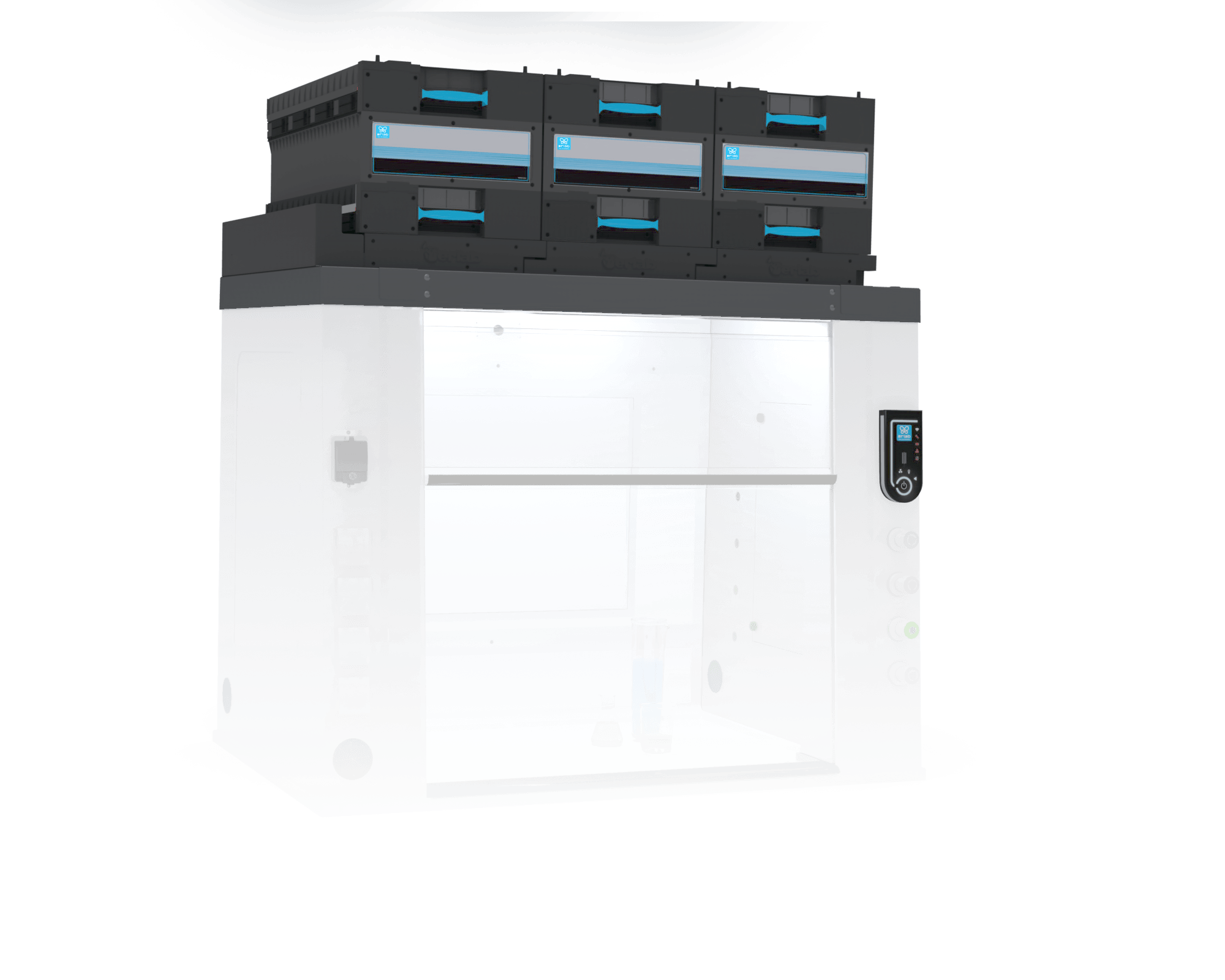
How do you add a high-performance fume hood to an existing laboratory when space is limited, ductwork is unavailable, and safety requirements are non-negotiable?
This was the challenge faced by Harvard University’s Lyman Laboratory of Physics in Cambridge, Massachusetts, during the renovation of one of its research facilities.
Customer Overview
Company: Harvard University – Lyman Laboratory of Physics
Industry: Academic research (quantum physics, ultracold atoms)
Project type: Laboratory renovation
Laboratory focus: Research on ultracold atoms and quantum physics
Location: Cambridge, MA, USA
Building: Lyman Hall (basement laboratory)
Completion date: May 2014
Architect: Wilson Architects
Construction manager: Shawmut Construction
Erlab ecosystem: 1 Green Solution Hood featuring GreenFumeHood technology
Integration: Air Master Systems
Supporting Cutting-Edge Research in Quantum Physics
Harvard’s Lyman Laboratory required an additional fume hood to support advanced research on ultracold atoms and quantum physics, fields that are essential for the development of next-generation materials used in supercomputing and magnetic storage technologies.
This type of research involves complex chemical manipulations, requiring a high level of containment and flexibility. The new equipment therefore had to integrate seamlessly into an already operational laboratory environment while meeting strict safety standards.
A Highly Constrained Laboratory Environment
Adding a fume hood to an existing laboratory is never straightforward, but the situation at Harvard presented additional complexity.
The laboratory was located in the basement of an older building, where available space was extremely limited and no ductwork infrastructure was available. Under these conditions, installing a traditional ducted fume hood was simply not an option.
An alternative low-flow fume hood had been considered, but it was ultimately rejected by the Environmental Health & Safety (EH&S) department because it did not meet required face velocity standards. The laboratory needed a solution capable of handling a wide range of substances—including solvents, acids, bases, and particulates—while ensuring full compliance with safety requirements.
In addition, the future fume hood had to integrate advanced features such as real-time monitoring capabilities and reliable detection of filter breakthrough, all without requiring modifications to the building infrastructure.
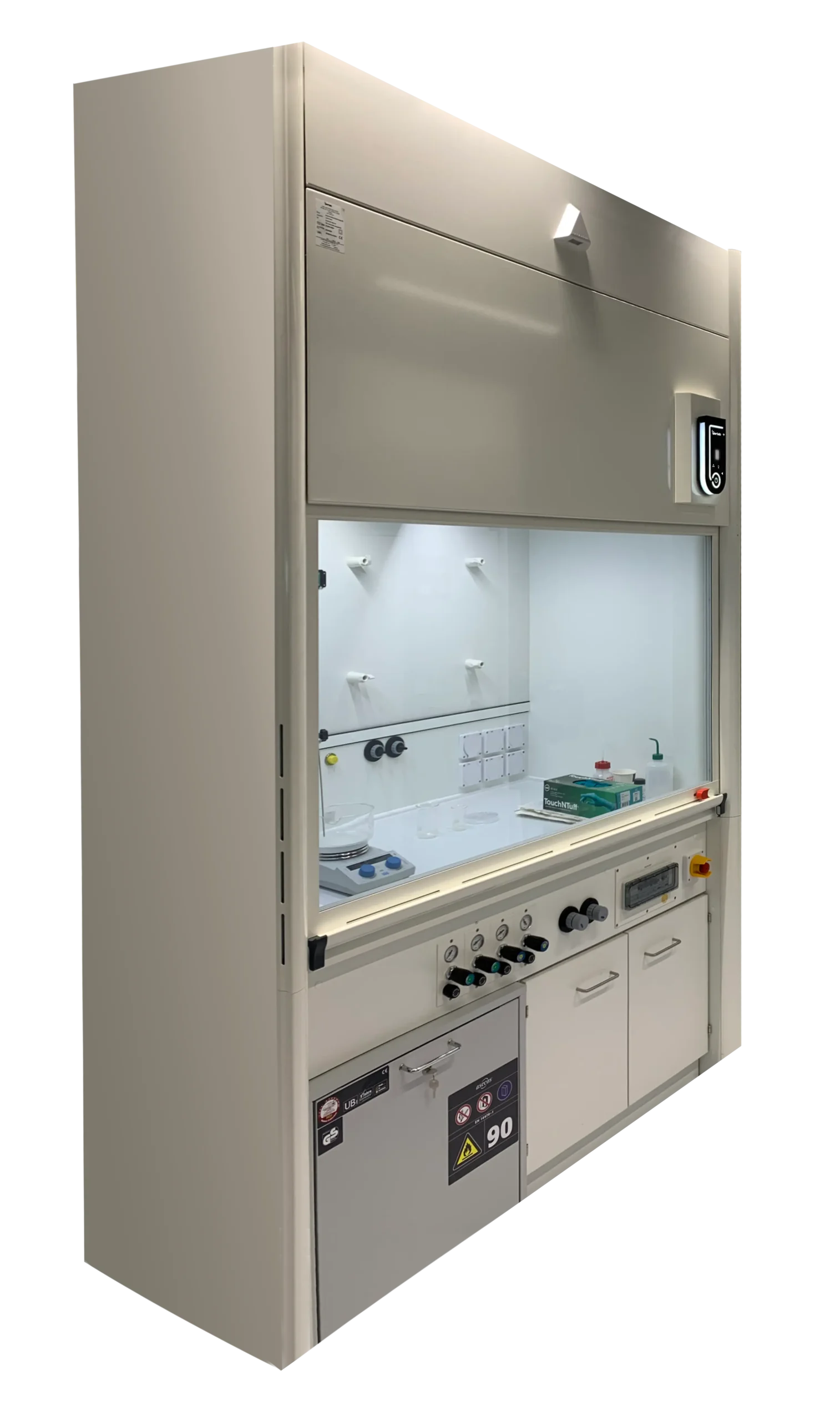
A Ductless Solution with GreenFumeHood Technology
To overcome these constraints, the project team selected a Green Solution Hood from Air Master Systems, equipped with Erlab’s GreenFumeHood technology.
This filtration-based solution relies on advanced molecular filtration combining pre-filtration and patented Neutrodine filters, designed to capture a wide spectrum of chemical pollutants.
The system also integrates HEPA filtration and an acid storage cabinet, making it suitable for handling both chemical vapors and particulates in a single enclosure. One of its key advantages lies in its ability to automatically detect chemical filter saturation, ensuring continuous protection for laboratory users.
Because the hood operates without ductwork, it could be installed directly in the existing laboratory without impacting the building’s mechanical systems.
A Seamless Integration with Immediate Benefits
Once installed, the GreenFumeHood solution met all of Harvard’s technical and safety requirements, while offering additional operational advantages.
The absence of ductwork meant that installation was straightforward and did not require costly modifications to the building. This not only simplified the project but also significantly reduced initial investment compared to a traditional ducted solution.
At the same time, the laboratory benefited from improved energy efficiency, as the filtration system eliminated the need for continuous air extraction. Over time, these energy savings were expected to exceed the cost of filter replacement, reinforcing the economic value of the solution.
A Flexible and Future-Proof Laboratory Setup
By choosing a ductless filtration approach, Harvard University gained a level of flexibility that would not have been possible with a conventional ventilation system.
The laboratory can now adapt more easily to evolving research needs without being constrained by infrastructure limitations. This is particularly important in cutting-edge research environments, where experimentation and requirements can change rapidly.
At the same time, the solution ensures a consistently high level of safety, meeting strict EH&S standards while providing advanced monitoring and control capabilities.