
How can a laboratory project be successfully completed while optimizing building ventilation, controlling costs, and improving user safety?
This was the challenge faced by Tefal (Groupe SEB) when designing a brand-new R&D laboratory dedicated to non-stick coating research.
Customer Overview
Company: Groupe SEB – Tefal
Industry: Non-stick coatings for cookware
Laboratory size: 1500 m²
Workforce on site: 1700 employees
Laboratory team: 40 chemists
Project: Creation of a new R&D laboratory in a purpose-built facility
Architect: Patriarche, France
Location: Rumilly (74), France
Erlab ecosystem: 10 GreenFumeHood (GFH) units
Integration partner: Burdinola, Spain
Building a New High-Performance R&D Laboratory
Tefal launched the construction of a 1500 m² R&D laboratory across three floors to conduct research, formulation, and physical characterization of non-stick coatings.
The project was managed by the architectural firm Patriarche, from initial design to final delivery, while Bureau Veritas ensured compliance with safety requirements.
From the outset, the objective was clear: design a laboratory that combines performance, safety, and cost-efficiency.
Within this environment, around 40 chemists carry out formulation and grinding processes, requiring reliable containment solutions and a high level of flexibility in daily operations.
When Ventilation Becomes a Limiting Factor
During the design phase, a risk analysis revealed a critical issue: the building’s HVAC system had been undersized. Despite the scale of the investment, it was not capable of supporting a sufficient number of ducted fume hoods.
This limitation quickly became a major constraint. Without enough fume hoods, laboratory operations would be restricted, potentially impacting productivity, safety, and future scalability. At the same time, increasing the ventilation capacity would have significantly raised both infrastructure costs and energy consumption.
Tefal therefore needed a smarter approach—one that could bypass HVAC limitations without compromising user protection.
A Filtration-Based Approach with GreenFumeHood 3
To address this challenge, Erlab carried out an upstream chemical risk analysis as part of its Erlab Safety Program. This step made it possible to define a protection strategy tailored to the laboratory’s actual applications.
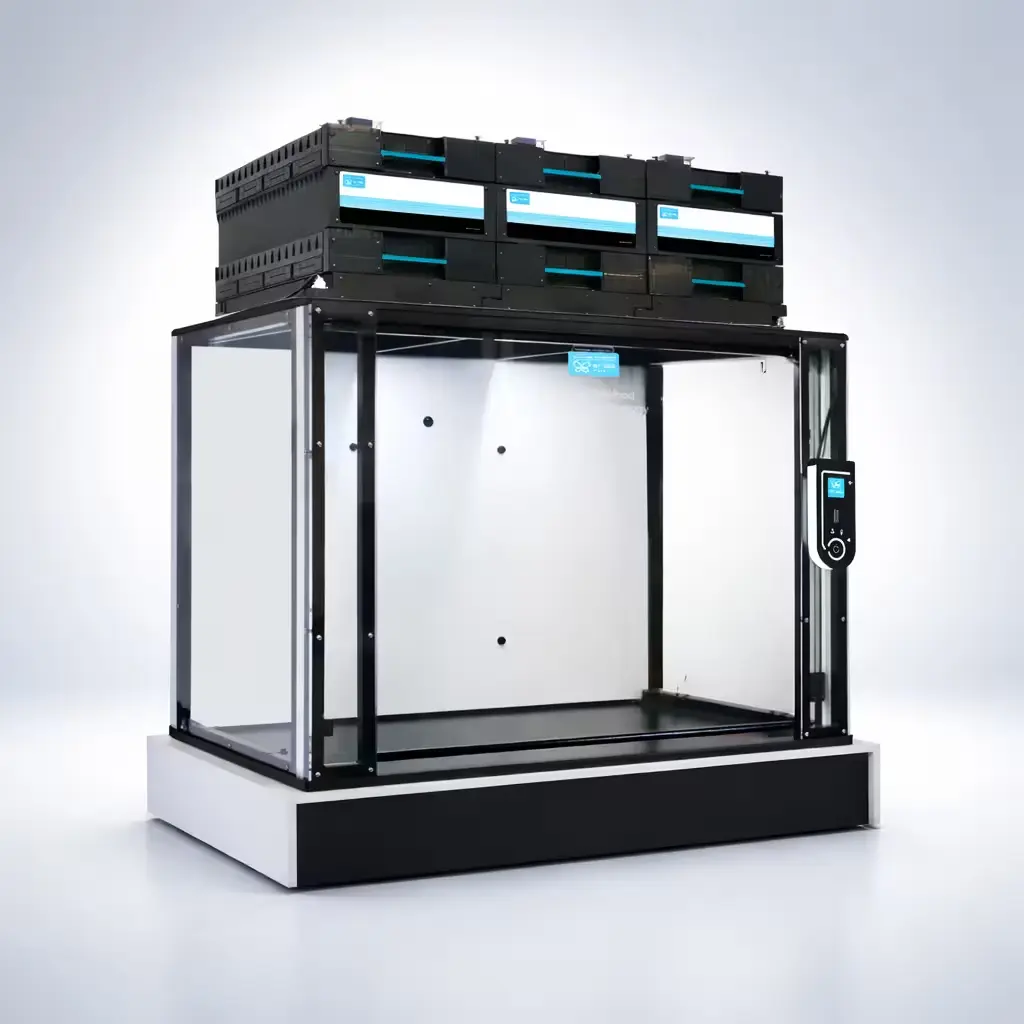
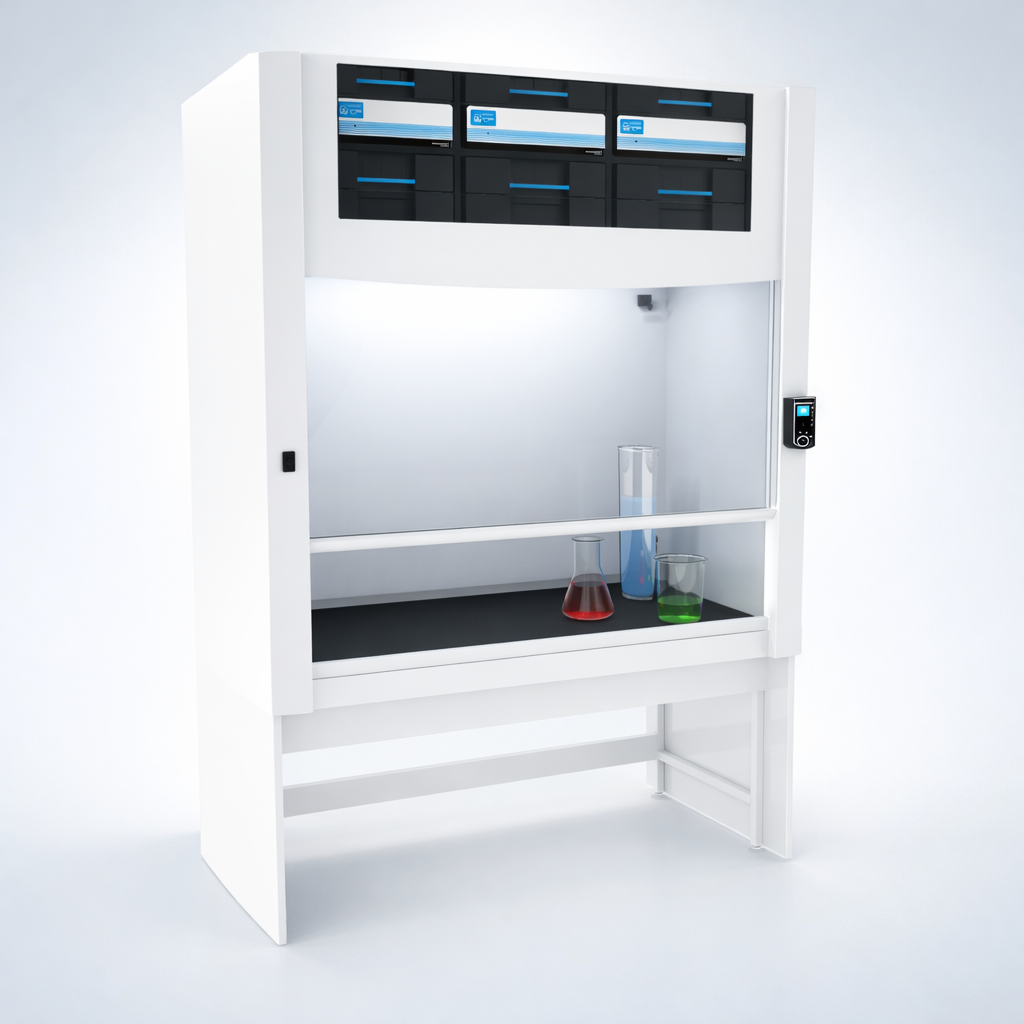
The solution was based on the integration of GreenFumeHood 3 recirculating fume hoods, installed by Burdinola as part of a complete laboratory setup.
Unlike traditional ducted systems, these fume hoods operate without connection to the building’s ventilation network. This immediately removed the constraints linked to HVAC capacity. At the same time, the use of Neutrodine Unisorb filtration ensured compatibility with a wide variety of chemical applications, while maintaining high safety standards in compliance with EN 14175-3 and NF X 15-211.
The final configuration combined ten recirculating fume hoods with three ducted units, creating a balanced and flexible solution adapted to all laboratory needs.
A High-Performance Laboratory with Controlled Costs
Once operational, the laboratory fully met Tefal’s expectations, both in terms of performance and cost efficiency.
The installation of filtration fume hoods made it possible to significantly reduce the volume of air treated within the building, while still maintaining an air renewal rate of seven times per hour. This optimization had a direct impact on the building’s infrastructure: the number of air handling units was reduced from seven to four.
As a result, energy consumption decreased and operating costs were significantly lowered. Overall, HVAC-related expenses were reduced by approximately €1.2 million, with a return on investment estimated at just two years.
Beyond the financial gains, the laboratory now benefits from a sufficient number of fume hoods, enabling all manipulations to be carried out safely and efficiently. The solution also offers long-term flexibility, allowing future reconfiguration of spaces without major technical constraints.
A Safer and More Flexible Working Environment
The adoption of GreenFumeHood 3 technology transformed the way the laboratory operates. By removing dependence on the ventilation system, Tefal gained both operational freedom and improved control over its environment.
Users now benefit from consistent protection, while the laboratory itself becomes easier to adapt to evolving needs. This flexibility is particularly valuable in R&D environments, where processes and requirements can change rapidly.
At the same time, the project demonstrates that improving safety does not necessarily mean increasing costs. On the contrary, when properly designed, filtration solutions can enhance protection while optimizing both investment and operating expenses.