

How can a laboratory overcome an insufficient number of fume hoods while reassuring teams about the effectiveness of Erlab filtration, both for laboratory personnel and the external environment?
This was the challenge faced by Ajinomoto Omnichem when setting up a new agrochemical R&D laboratory in Mons-St-Guibert, Belgium. With the support of the architectural firm Van Looy, the laboratory project required a solution that combined safety, efficiency, design, ergonomics, and compliance with the 5S method.
Customer Overview
Industry: Agrochemical product manufacturing
Laboratory size: 300 m²
Team: 9 chemists
Project: Conversion of a tertiary building into an R&D laboratory
Architect: Van Looy, Antwerp, Belgium
Location: Mons-St-Guibert, Belgium
Erlab ecosystem: 5 GFH units and 1 GFH Walk-in
Integration partner: Vinitex, Netherlands
The Context: Creating an Agrochemical R&D Laboratory in a Rented Building
Ajinomoto Omnichem formulates pesticides and produces surfactants on behalf of other manufacturers, including customers such as Bayer and Syngenta.
The project involved installing an agrochemical laboratory dedicated to R&D, formulation, and chemical synthesis. This new laboratory had to be created inside a rented building that had previously been used as office space and as a medical analysis laboratory.
Ajinomoto Omnichem was supported in this project by the architectural firm Van Looy, which proposed a solution designed to meet requirements for safety, efficiency, design, and ergonomics, while complying with the 5S method.
The Challenge: Limited Ventilation Capacity and Strong Odor Control Requirements
The site is located in a business area where companies from different sectors operate side by side. It was therefore essential to ensure that highly odorous and potentially toxic products would have no impact on employees, the environment, or the comfort of neighboring businesses.
The existing building ventilation system could only support the operation of five ducted extraction fume hoods. This number was insufficient for the operational needs of the laboratory.
Because the building was rented, the possibilities for modifying the ventilation system were limited. Ajinomoto Omnichem needed an alternative solution that would increase the number of fume hoods and allow operators to carry out their manipulations effectively.
Another challenge was Ajinomoto Omnichem’s initial reluctance toward filtration-based solutions. This hesitation came from a previous poor experience with a self-made hood that had not been effective.
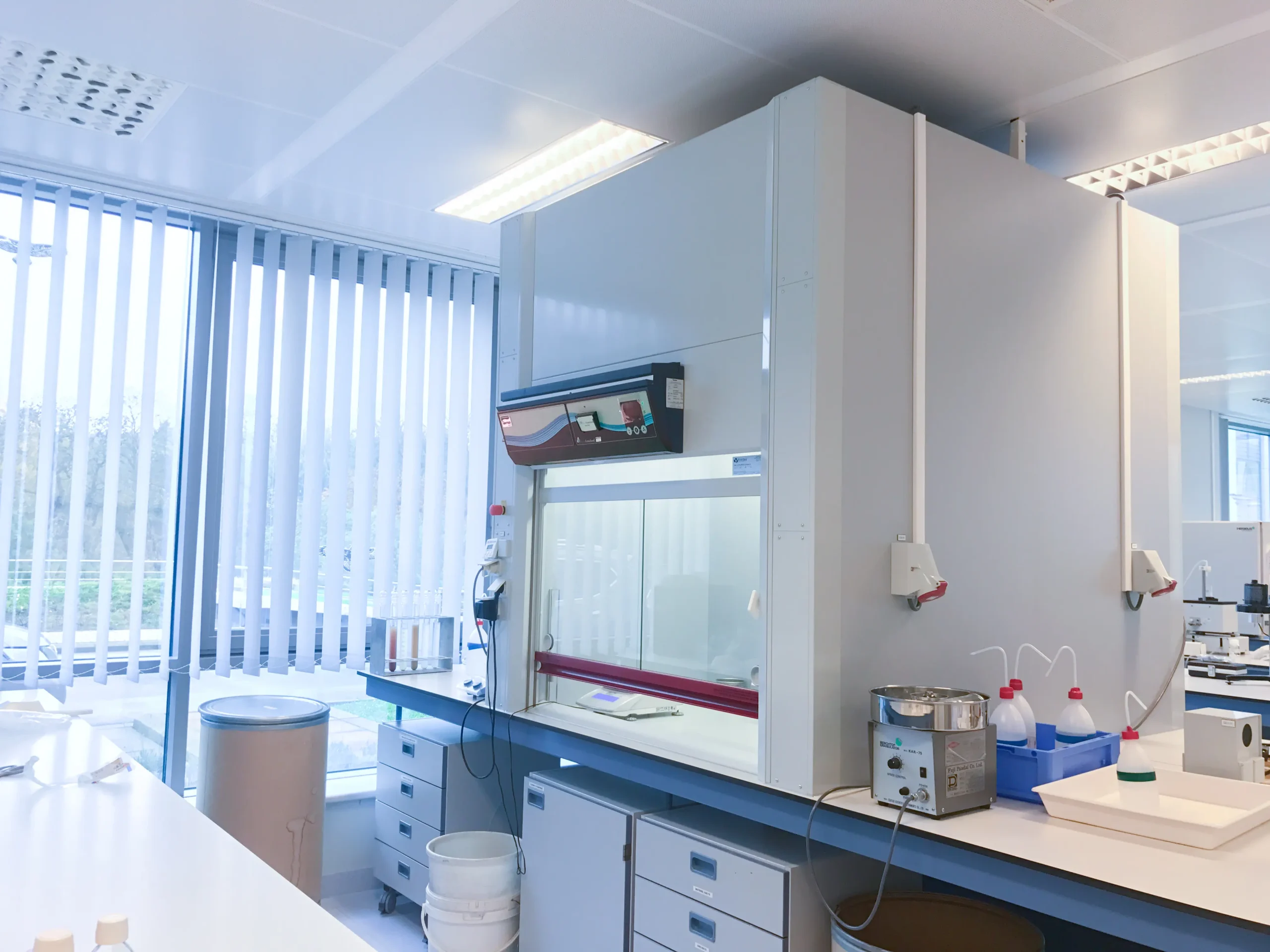
The Solution: Erlab GreenFumeHood 3 Recirculating Fume Hoods
Erlab and its integration partner Vinitex, a Dutch manufacturer of laboratory furniture, proposed recirculating fume hoods integrating GreenFumeHood 3 filtration technology for the new laboratory.
Because these recirculating fume hoods do not require connection to the building’s ventilation system, they could be installed without construction work. This allowed the laboratory to meet the operational needs of the R&D team while respecting the constraints of the rented building.
Ajinomoto Omnichem was reassured by the effectiveness of Erlab filtration thanks to the Erlab Safety Program, which includes an upstream chemical risk analysis, Erlab’s expertise, and previous installations for customers using highly odorous products, such as Bridgestone.
In Bridgestone’s case, the application involved rubber formulation for tire manufacturing.
The laboratory furniture manufactured by Vinitex was already known and used by Ajinomoto Omnichem in another previously installed project. It also provided a harmonious and consistent design throughout the entire laboratory.
The Result: A Functional, Flexible, and Safe R&D Laboratory
In September 2017, Vinitex fitted out the laboratory by installing five GFH recirculating fume hoods. A GFH Walk-in recirculating fume hood was also installed in the basement for weighing large quantities of odorous powders.
A Walk-in fume hood is a fume hood without a work surface, with a full opening from floor to ceiling.
Key Benefits Delivered
The solution provided Ajinomoto Omnichem with:
A laboratory meeting the customer’s operational and ergonomic needs
Faster implementation of recirculating fume hoods, enabling the laboratory to become operational sooner than expected
The possibility of future relocation or space reconfiguration
A showcase laboratory with a harmonious design, open to visits from Ajinomoto customers
Respect for neighboring businesses and the environment
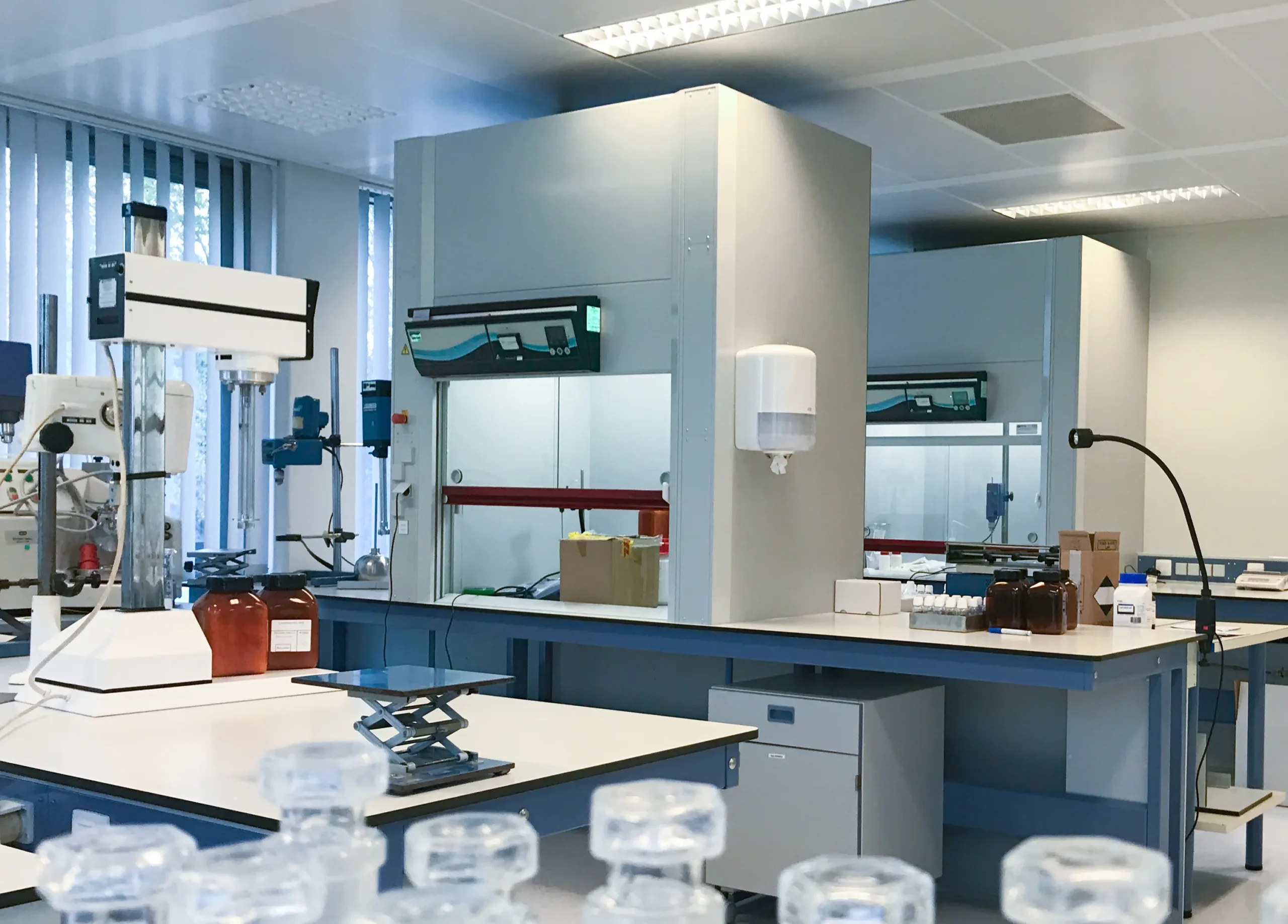
Feedback After 5 Years of Use
After Ajinomoto moved into the new laboratory, strong odors persisted. It became clear that certain chemicals were being handled under extraction arms, which proved ineffective.
The handling of these products was moved into the GFH recirculating fume hoods, and the odors immediately disappeared.
Ajinomoto’s reservations about filtration were completely removed. The company was first reassured by the Erlab Safety Program, which guided and supported them in choosing a safe and suitable solution. They were then reassured by Vinitex’s support in installing the GFH recirculating fume hoods and by their proven effectiveness in everyday use.
Ajinomoto Omnichem is now convinced of the benefits of filtration and has the same level of confidence in its various fume hoods, whether they are recirculating or ducted extraction models.